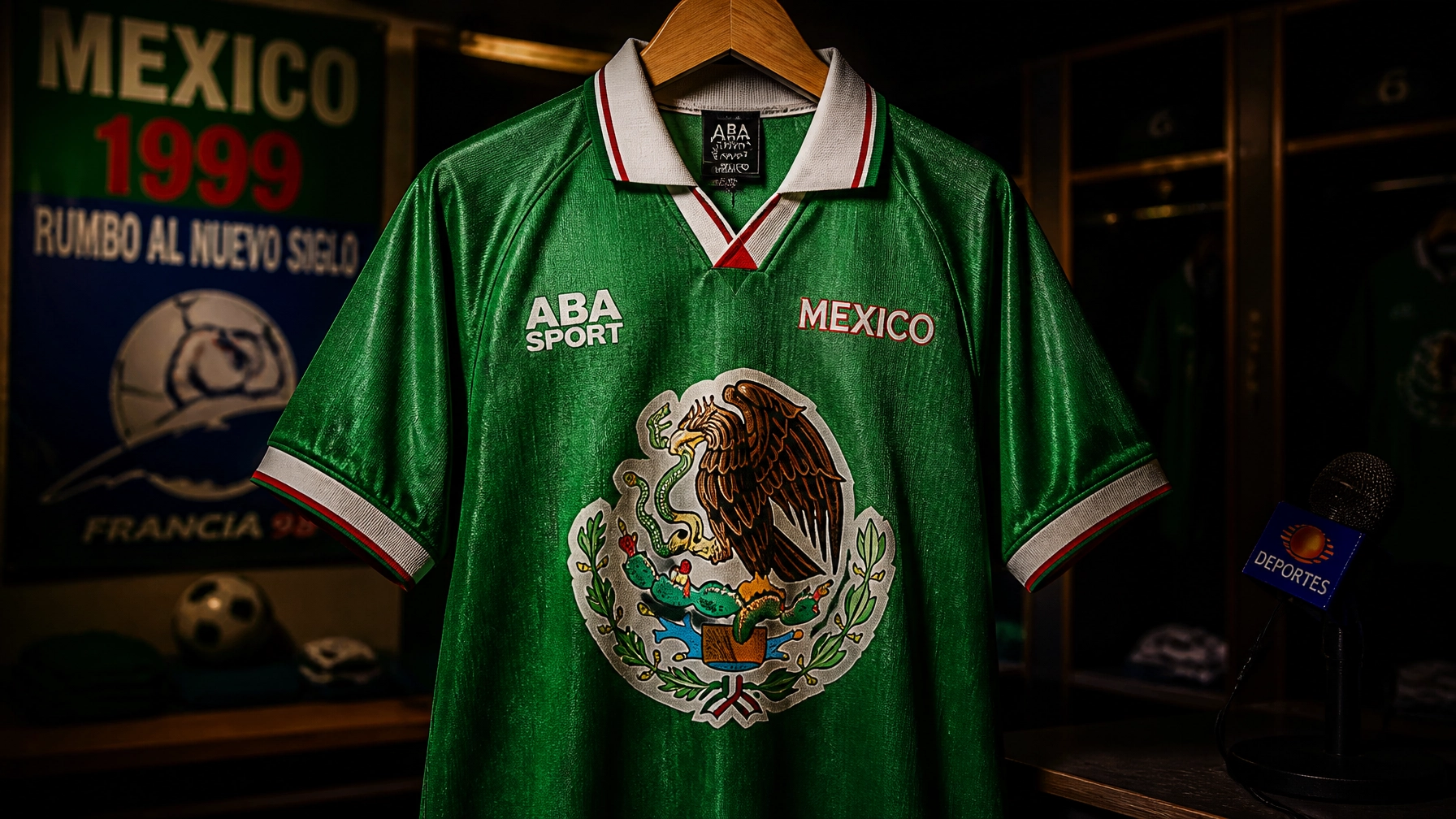


DID YOU KNOW? In 1999, the Mexican National Team almost took the field wearing a jersey that was technically a crime.
In the world of soccer culture, jerseys are more than just fabric: they are symbols of identity. But in Mexico, there is a very fine line between “patriotic pride” and “legal violation.” In 1999, the Mexican brand Garcis accidentally crossed that line, creating what is now known as the “Prohibida” (The Forbidden One).
It’s a story of ambition, government intervention, and a 4-3 thriller against Brazil that changed Mexican football history forever.
The Big Idea: Putting the Shield on the Chest
Fresh off the massive success of the 1998 “Aztec Calendar” jersey (which is still a brand icon today), Mexico was preparing to host the 1999 FIFA Confederations Cup.
José Antonio García, the owner of Garcis, wanted to go even bigger. Instead of just a team crest, he wanted the National Coat of Arms: the legendary eagle devouring a serpent atop a cactus: to dominate the entire front of the shirt.
He didn’t just wing it, either. García actually went to the Interior Secretary at the time, Francisco Labastida Ochoa, and got the green light. With official approval in hand, Garcis fired up the machines and produced between 50,000 and 60,000 units.

Then Came the Law
As the jerseys started appearing in newspapers and shop windows, the Mexican Congress did a double-take.
While the Interior Secretary might have said “cool,” the Constitution had other ideas. Mexico’s Law on the National Shield, Flag, and Anthem is incredibly strict. It prohibits the use of national symbols for commercial purposes. Basically, you can’t sell the country’s official seal on a piece of athletic gear for profit.
The government dropped the hammer. They ordered Garcis to pull every single jersey from the shelves within 15 days.
“What’s Forbidden is What People Like Most”
Garcis was stuck with tens of thousands of “illegal” jerseys. But José Antonio García was a businessman first. As he famously said, “Lo prohibido es lo que más gusta” (What is forbidden is what people like most).
Since the Mexican law didn’t apply across the border, Garcis shipped the bulk of the banned stock to the United States. Because they were never officially worn in a match and were banned in their home country, they immediately became the ultimate “holy grail” for collectors. If you find an original ’99 Garcis with the full shield today, you’re looking at a piece of history that usually stays locked in a vault.

Winning the “Legal” Way
With the “Prohibida” banned, Garcis had to scramble to make a “sanitized” version for the tournament. They replaced the national coat of arms with the standard Mexican Football Federation (FMF) crest.
Maybe the drama gave the team some extra fire. Mexico went on a legendary run in that 1999 tournament, eventually facing a powerhouse Brazil team (featuring a young Ronaldinho) in the final at the Estadio Azteca. In a high-octane 4-3 victory, Mexico claimed the trophy: wearing the “legal” jersey, while the “forbidden” ones were already being snatched up by fans in the US.
The Legacy of the Prohibida
Today, the 1999 Garcis jersey remains one of the most unique culture stories in sports. It serves as a reminder of the power of national symbols and the chaotic energy of 90s sports marketing.
At Sports Media Network, we love these “behind the kit” stories. Whether it’s local clubs making waves or national icons breaking the rules, the gear we wear tells the story of the games we love.
Quick Stats on the Prohibida:
- Manufacturer: Garcis
- Production: ~60,000 units
- The Ban: Violated the Law on the National Shield, Flag, and Anthem
- The Twist: Shipped to the US to avoid destruction
- The Victory: Mexico won the 1999 Confederations Cup in the replacement kit
So, the next time you see a Mexico jersey at a swap meet or on eBay, check the chest. You might just be looking at a piece of contraband.