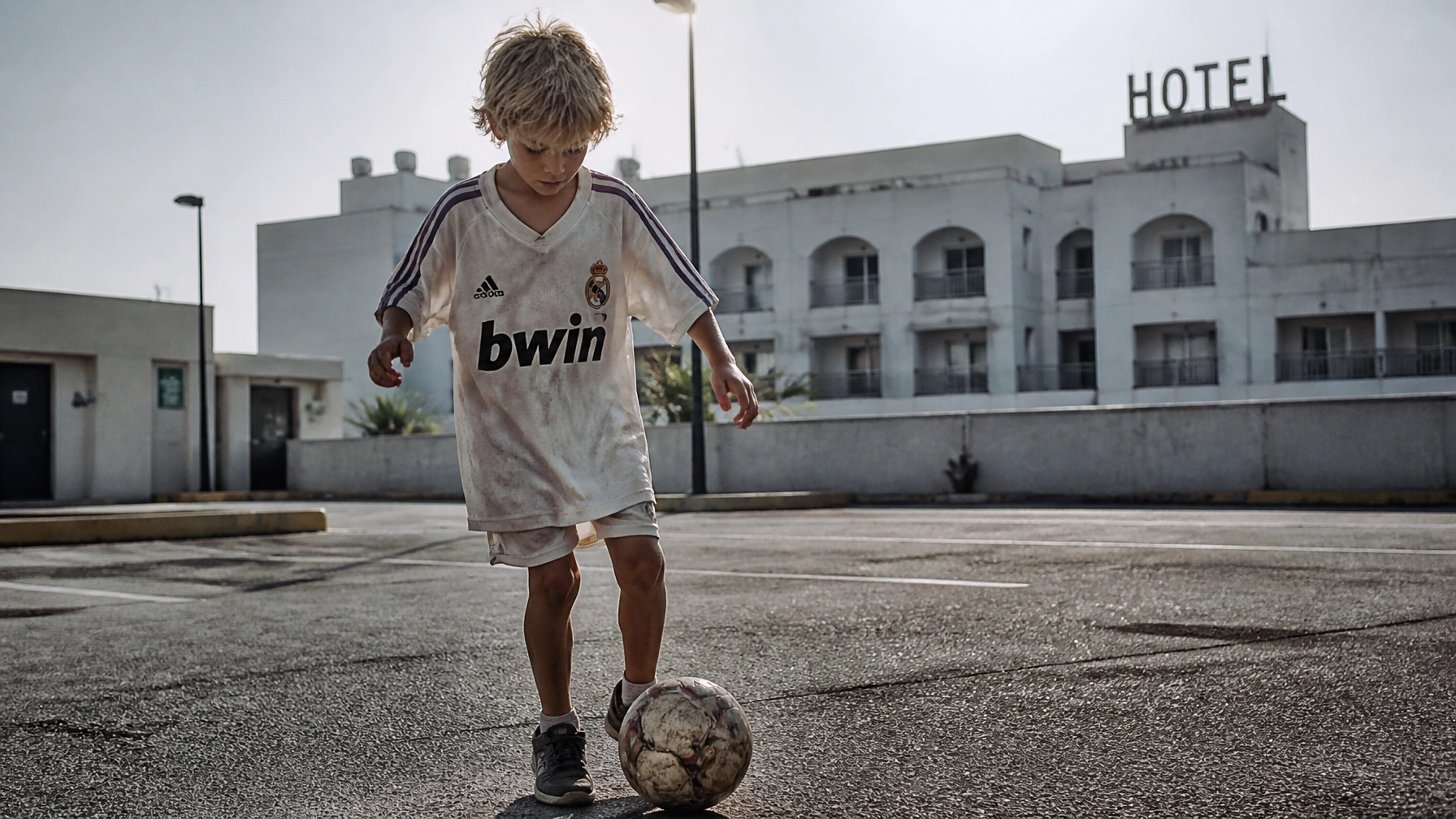


Before the bright lights of the world’s biggest stadiums, before the velvet touch that defines a generation of midfielders, and long before he became a symbol of national pride, Luka Modrić was just a boy with a ball and a very loud siren.
In the village of Modrići, tucked into the rugged slopes of the Velebit mountains in Croatia, life was defined by the wind and the silence of the highlands. A young Luka spent his earliest years here, often following his grandfather: also named Luka: as he tended to the family’s goats. It was a simple, quiet life, but in late 1991, the silence was shattered.
The Croatian War of Independence arrived at their doorstep with a brutality that children should never have to understand. In December of that year, Serbian militia captured the area. Luka’s grandfather, the man he was named after and the man he adored, was executed while grazing his cattle.
The family house was burned. The village was abandoned. In an afternoon, six-year-old Luka lost his home, his grandfather, and the only world he had ever known.
Seven Years in Room 216
The Modrić family fled to Zadar, a coastal city that was itself under siege. They became refugees, a label that carries a heavy, invisible weight. They were moved into Hotel Kolovare, a concrete block that became their universe for the next seven years.

Life in Hotel Kolovare wasn't a vacation. There was often no running water and no electricity. The sounds of waves hitting the Zadar shore were frequently drowned out by the scream of air-raid sirens. When the shells started falling, the children would huddle in the basement or under school desks.
But as soon as the "all-clear" sounded, Luka was back out.
He didn't have a grass pitch. He had the hotel parking lot: a rectangle of cracked asphalt and oil stains. He didn't have a team of coaches; he had the hotel windows and the grey walls of the corridors. The hotel staff remember him as the boy who was always breaking things with his ball, the scrawny kid who seemed to be trying to outrun the war with his feet.
At Sports Media Network, we often talk about the "culture of the game," but for Luka, the culture was survival. Every dribble between parked cars was a moment of normalcy in a world that had gone mad.
"Too Thin to Make It"
Even in the middle of a war zone, talent has a way of glowing. Word began to spread about the small kid at the refugee hotel who could do things with a ball that didn't make sense for his size.
When he was eight, he finally got his big chance: a trial with Hajduk Split, the club he grew up supporting. He travelled there with hope, but he returned with a broken heart. The coaches at Hajduk looked at his thin frame, his spindly legs, and his height, and they sent him home. They told him he was too weak, too fragile for the professional game.
It’s the kind of rejection that ends most stories. For a refugee kid whose family was already struggling to survive, it could have been the final whistle.

His father, Stipe, worked as an aeromechanic for the military, earning barely enough to keep the family fed in the hotel. Money for professional gear was non-existent. Legend has it that Stipe even tried to fashion makeshift shin pads out of wood because they couldn't afford the plastic ones. While Luka later recalled having a pair with the Brazilian Ronaldo on them, the struggle behind every piece of equipment was real. His parents sacrificed their own comfort to ensure he had the one thing that kept him going: a pair of boots and a ball.
The People Who Saw the Spark
Luka Modrić didn’t make it to the top alone. He was carried there by people who looked past the "refugee" label and the "too skinny" diagnosis.
His parents, Stipe and Jasminka, were his first shields. They never let him see the full extent of their fear. They kept the horrors of the war at bay so he could focus on the trajectory of a ball. They chose to believe in his dream when their reality was a single room in a crowded hotel.
Then there was Tomislav Bašić.
Bašić was the head of the youth academy at NK Zadar. While others saw a boy who would get pushed off the ball, Bašić saw a player who could see the game three seconds before anyone else. He became a second father to Luka, helping him navigate the technical and emotional hurdles of being a displaced child in a competitive world. Bašić was the one who eventually pushed for him to join Dinamo Zagreb, convinced that the "scrawny kid" had a heart that no defender could track.

The Weight of a Name
When you watch Luka Modrić play today, you aren't just watching a technician. You are watching a man who spent his childhood navigating landmines: both literal and figurative.
There is a specific kind of resilience that comes from playing football while waiting for a siren to go off. It’s why he never seems to tire in the 120th minute of a match. It’s why, when he is pressured by three defenders, he remains as calm as if he were still in that hotel parking lot in Zadar.
He doesn't play for the trophies, although he has won them all. He doesn't play for the stats, which could never capture the way he dictates the rhythm of a match.
He plays for the man whose name he carries.

Every time Luka Modrić steps onto a pitch, he carries the memory of the grandfather who was taken from him in the mountains. He carries the weight of the seven years spent in Hotel Kolovare. He carries the belief of the coaches who told a skinny refugee kid that he was enough.
The war took his home, but it couldn't take the ball from his feet. In the end, the boy who was told he was too weak to play became the man who carries the spirit of an entire nation on his shoulders.