

By Leo Doodles | Sports Media Network
The Ring in San Benito
Before the bright lights of San Bernardino, before the WBC belt, before Guatemala began calling his name, there was a modest ring in San Benito, Petén.
There were borrowed gloves, a young athlete learning how to stand, move, and absorb instructions. And there was a left-footed kid who had just fallen in love with soccer.
This is where the story of Lester Normandy Martínez Tut begins: not with a world title, but with a village that recognized possibility before the rest of the boxing world knew where to look.
Martínez was born on October 17, 1995, in Melchor de Mencos, Petén, and raised in Barrio La Candelaria, San Benito. As a child, he played soccer and lined up as a left-sided defender. He was quick with the ball, stubborn in the tackle, and difficult to get past.
His first sporting identity was not of a “fighter.” It was simply “the kid who could play.”
…But in San Benito, people were paying attention.
Crucita Delgado saw him during a youth soccer tournament at the fields of Colón and Exán. He was not even registered with a team. What caught her eye was the way he struck the ball.
“He hit the ball very well; he was left-footed,” Delgado recalled in an interview with Prensa Libre.
She asked him if he wanted to play, then went to speak with his parents. After that, she began picking him up from home for matches and training. She took his team as far as Tapachula, Mexico. On the field, Martínez played on the left side of the defense, where Delgado remembers him as a player who “did not let anyone pass.”
When soccer eventually gave way to boxing, Delgado was not surprised.
“With his character and temperament, he was going to stand out in that sport,” she said.
Today, when Martínez is taking heavy shots under the lights, Delgado still watches through her fingers. Sometimes, she closes her eyes.
That is not just fandom. That is the feeling of watching someone you knew before the world knew his name.

The Fighter: A Career Built One Round at a Time
Lester Martínez competes in the super-middleweight division at 168 pounds. As of his WBC interim title victory, his professional record stands at:
- 21 professional fights
- 20 wins
- 0 losses
- 1 draw
- 16 wins by knockout
- Approximately a 76 percent knockout rate
That record tells us he can punch. It does not fully explain how he arrived here.
Martínez made his professional debut on April 6, 2019, against former world champion Ricardo Mayorga. He won by knockout, immediately giving boxing fans a reason to remember the name.
The regional titles followed:
- WBC Latino champion in 2020, after defeating Uriel González
- WBO Latino champion in 2021, after defeating Gabriel López
- NABA champion in 2022, after defeating Rodolfo “Cobrita” Gómez Jr.
- WBC Latino champion again in 2024, after defeating Rubén Angulo
Then came the fight that moved him from promising contender to international presence.
In September 2025, Martínez met Christian Mbilli on the Canelo Álvarez–Terence Crawford Netflix card in Las Vegas. It was ten rounds of pressure, power, and refusal. Neither fighter could create enough separation on the scorecards, and the bout ended in a split draw.
The result did not diminish Martínez. It expanded him.
The fight became one of the most widely praised contests of 2025, a high-action showcase that left fans and boxing writers asking for a rematch. More importantly, it proved that the Guatemalan could stand in the center of the super-middleweight division and trade with one of its most dangerous names.
On March 21, 2026, Martínez completed the next part of the climb.

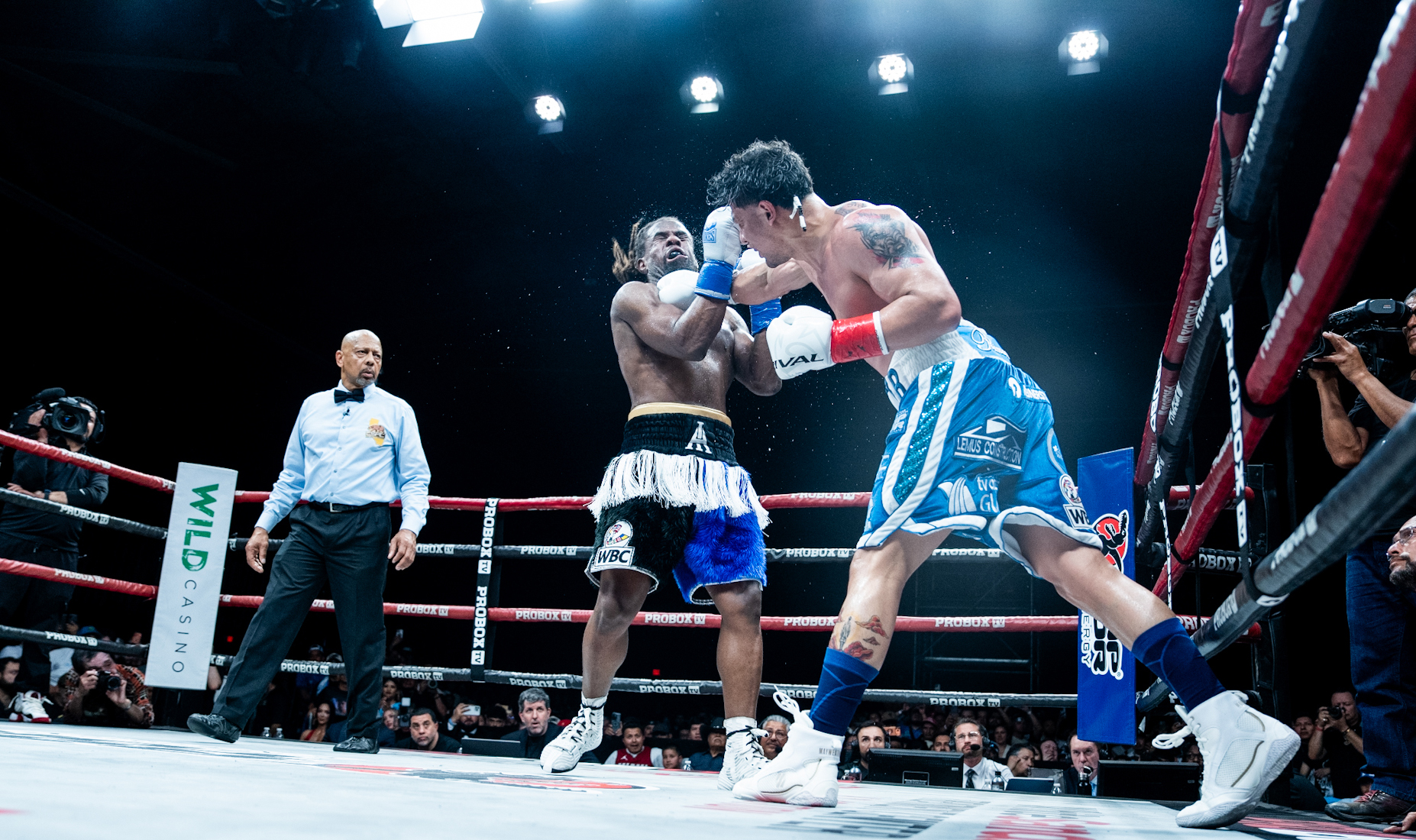
Photo by: Alex Escobedo alexephotography1
At the National Orange Show Event Center in San Bernardino, California, he defeated Immanuwel Aleem by unanimous decision over 12 rounds. The reported scorecards: 120-108, 119-109, and 118-110: reflected a controlled, technically mature performance.
The victory made Martínez the first Guatemalan boxer to win a world title, capturing the vacant WBC interim super-middleweight championship.


He is now ranked among the division’s leading contenders, with Canelo Álvarez ahead of him in the WBC picture. This August, while preparing for his first title defense in Los Angeles, Martínez is no longer fighting simply to be noticed.
He is fighting as the standard.
Before the Belt, There Were Medals
The professional record is impressive, but the foundation was laid years earlier in amateur competition.
Martínez won gold at the 2009 Campeonato Nacional Infantil at 54 kilograms. In 2011, he earned bronze at the Continental Junior Championship in Ecuador.
Then came the result that announced his potential beyond Guatemala.
At the 2012 AIBA Youth World Championships in Armenia, Martínez won silver. He became the only Guatemalan boxer to medal at an AIBA World event, a distinction that placed him in the country’s sporting history before he had even entered the professional ranks.
Six years later, he won gold at the 2018 Central American and Caribbean Games in Barranquilla. His victory ended Guatemala’s 68-year wait for a boxing gold medal at the Games.
The pattern was already there: first the local breakthrough, then the national milestone, then the international stage.
The world title in San Bernardino did not appear out of nowhere. It was the latest result of a career built through years of travel, sacrifice, coaching, study, and repetition.
The Village Behind the Champion
Sports often presents victory as an individual act. One athlete. One ring. One raised hand.
But Martínez’s story resists that framing.
The Sports Media Network Village is not a slogan here. It is the architecture of his career.
Don Hermelindo and Doña Lucidia: The Believers

Credit: Foto Prensa Libre: María Reneé Barrientos Gaytan
Martínez’s parents, Don Hermelindo and Doña Lucidia, supported him when the path was still uncertain.
They had watched him play soccer. They had seen the transition to boxing. And when an opportunity came for him to study and train in Puerto Barrios, his father gave him advice rooted in personal sacrifice:
“If I had had that opportunity, I would have taken it. Now it is your turn.”
Martínez left and returned months later more disciplined and focused. For his parents, the distance was difficult. Every fight brought pride, but also nerves. The family gathered to watch whenever possible, sometimes traveling, often supporting him from Guatemala with faith and prayer.
His father’s message has remained consistent: Lester has never been alone.
“God has always been with him, and so have we,” he said.
That sentence may be the truest description of a support system in this entire story.
Crucita Delgado: The First Scout
Before anyone called him a world champion, Delgado saw an unregistered left-footed soccer player and made room for him on a team.
She gave him access. She brought him to games. She helped him experience competition beyond his neighborhood.
Her role was not to predict every detail of his future. It was to recognize that a young athlete deserved a chance to test himself.
That is what grassroots sports can do at its best. It does not always have perfect facilities or extensive resources. Sometimes it has a coach who notices a child and goes to ask the family a simple question:
Do you want to play?
Hugo René Kilkán: The Man Who Knew
Kilkán met Martínez when he was about 11 years old and saw something different in the way the boy moved.
A trainer learns to read more than punches. He watches posture, balance, discipline, reaction, and attitude. Kilkán believed Martínez had the qualities to go far.
He arranged an exhibition bout after only 15 to 20 days of training. It was a test, but it became confirmation.
From the beginning, Kilkán repeated the phrase that would follow Martínez through the years:
“Sos un campeón y lo vas a seguir siendo.”
You are a champion, and you will continue being one.
Kilkán did not create the dream alone, but he helped give it direction. He also played a role in securing the Puerto Barrios scholarship that changed the young boxer’s daily life.
Esaú Diéguez: The Immigrant Dream
The connection between Martínez and Esaú Diéguez carries its own history.
Diéguez was born in Santa Cruz Barillas, Huehuetenango, and emigrated to the United States in the 1990s. His own boxing dreams ended after losses, followed by work in meat-processing plants. But the sport remained part of him.
In Omaha, he built a community gym with Brian “Bo” McIntyre. That gym became a place where young athletes could train: and where they found a teenager named Terence Crawford.
Crawford would become a three-division undisputed champion. Diéguez became known as a trainer of champions.
Now he guides Martínez alongside fellow Guatemalan trainer Héctor Arriola. Their partnership joins two stories of migration, persistence, and belief.
“I come from a very small town,” Diéguez once said. “I never thought I would go far, but God has been very great. He has exaggerated in blessing me.”
Two Guatemalans: one a champion-maker, one a champion: are writing a new chapter together.
Terence Crawford: Advice From the Other Corner
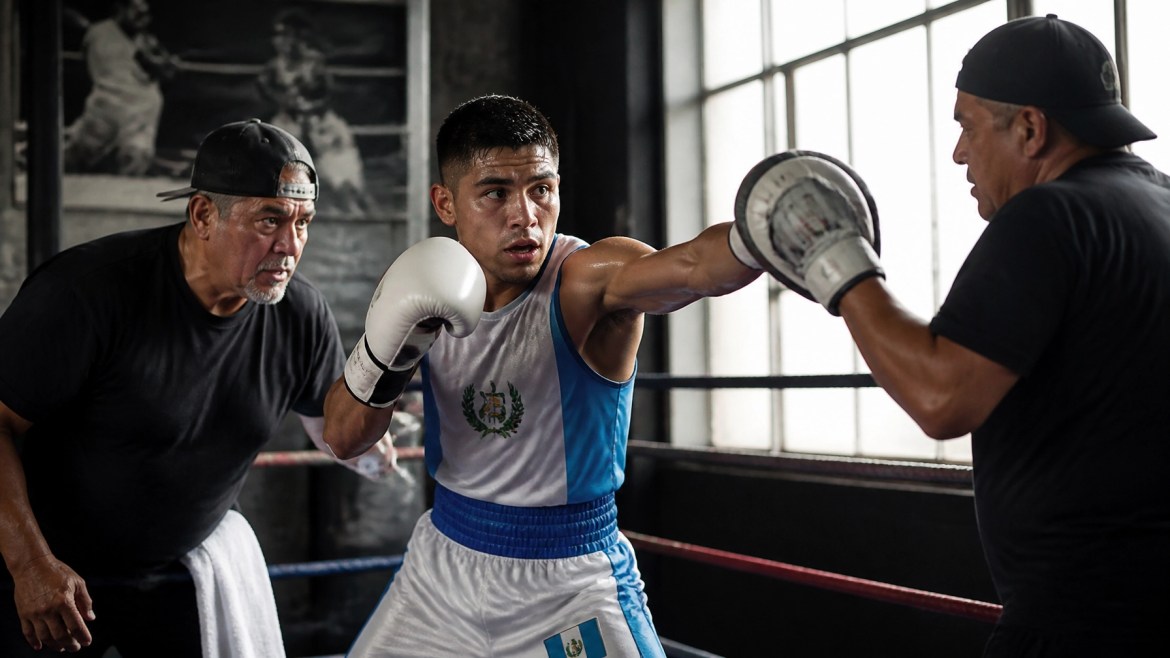
Before the Aleem fight, Crawford joined Martínez’s camp. He sparred with him, worked through technical details, and shared advice from a career spent at the highest level.
There is something powerful about that image: one champion lending his experience to another before history is made.
Crawford was not there to take the spotlight. He was there to contribute to the village.
The Meaning of Lester Martínez
The left-footed kid from San Benito chased a ball before he found a ring. His career moved through borrowed gloves, local coaches, family conversations, amateur medals, regional belts, and difficult nights against elite competition.
Now he carries Guatemala’s first world boxing title.
But the deeper meaning is not that Lester Martínez escaped his village. It is that he carried it with him.
He carries the soccer field where Crucita Delgado first noticed him. He carries the ring where Hugo René Kilkán told him he was a champion. He carries the family gathered around the television, praying between rounds. He carries the immigrant experience of Esaú Diéguez and the wisdom shared by Terence Crawford.
That is the Sports Media Network story: the Village over the individual, culture around the competition, and the human side as the only side.
In Los Angeles: a city shaped by migration, ambition, and reinvention: Martínez now prepares to defend his crown.

But the ring that matters most may still be the modest one in San Benito, where a child first learned he could become something more because someone saw it, said it aloud, and helped him believe.
References & Further Reading
- Prensa Libre : “‘Nunca dejó de creer’: la familia de Léster Martínez”
- Prensa Libre : “Crucita Delgado, la entrenadora que lo encontró en el futbol”
- Prensa Libre : “Hugo René Kilkán revela cómo descubrió a Léster”
- La Hora : “Esaú Diéguez, el entrenador de campeones”
- Guatemala.com : Biografía de Lester Martínez
- WBC Boxing : “Historic Triumph for Guatemala: Lester Martínez, the New WBC Champion”
- The Ring : “Martinez Outworks Aleem, Wins WBC Interim Super-Middleweight Crown”
Special thanks to Alex Escobedo @alexephotography1 for the amazing images captured ring side during the boxing match.