

The first thing you notice is rarely the final score.
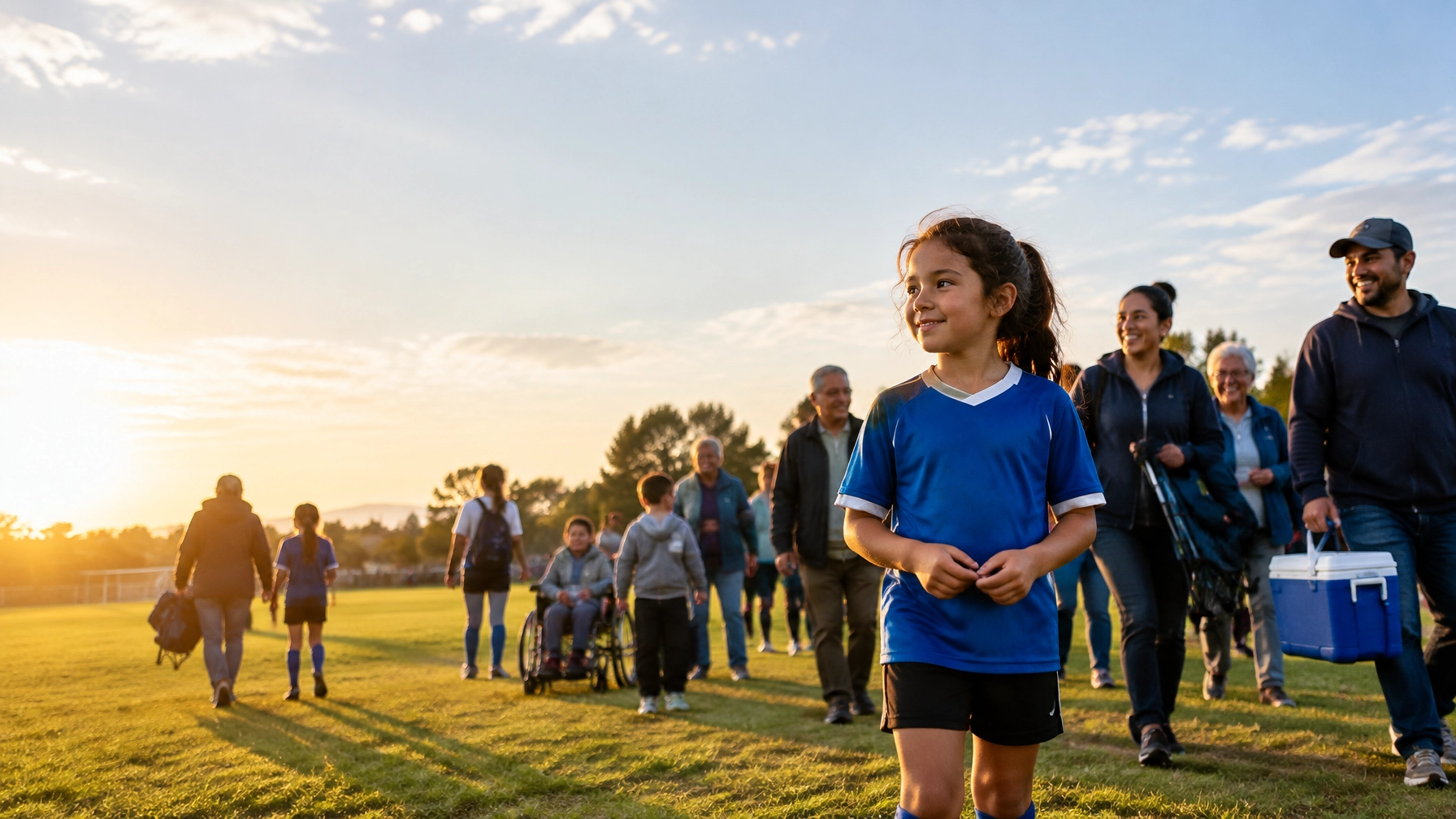
It is the sound of folding chairs opening along the sideline. The parent calling from the parking lot: “I saved you a spot.” The grandparent arriving early enough to watch warmups. The coach kneeling to retie a young athlete’s shoe. The volunteer arranging fruit, water, and snacks on a table that has seen more seasons than anyone can remember.
Then the players run out.
For a little while, the field belongs to them. But the game has already brought everyone else together.
Youth sports are often described through development, competition, discipline, or opportunity. All of that matters. But at the grassroots level, sports can offer something even more lasting: a place where families are known, needed, and welcomed back week after week.
A jersey may fit one child. The meaning behind it belongs to an entire family.
The Season Begins Before the Whistle
Every youth sports season has a rhythm.
There are early mornings and rushed breakfasts. There are cleats by the front door, uniforms folded on a chair, and a ball rolling beneath the passenger seat. Families learn to carry extra water, extra tape, and sometimes an extra snack for a teammate who forgot theirs.
The schedule can be demanding. Still, something meaningful happens inside that routine.
Families begin to build their weeks around a shared place. They learn which entrance to use, which patch of grass gets the best view, and which other parents will be there before kickoff. A simple practice becomes a familiar gathering. A game becomes a meeting point.
For some families, that rhythm offers a welcome sense of stability. Life can move quickly, and everyone may be pulled in different directions by school, work, and responsibilities. But on game day, the club creates a reason to arrive at the same place and stand together.
The field becomes part of the family story.

The Sideline Becomes a Second Home
The most important conversations at a youth game do not always happen on the field.
They happen beside the coolers. In the parking lot. During the walk from the car. On the sideline, where one parent learns that another is celebrating a birthday, navigating a difficult week, or trying to help a nervous young athlete feel ready to play.
At first, families may only know each other by jersey number. Over time, names replace numbers. Parents begin sharing rides. Grandparents bring chairs for one another. Someone notices when a family is missing and sends a message to check in.
This is how belonging is built: not in one grand gesture, but through repeated moments of recognition.
Research and community programs have long pointed to this social side of youth sports. The Cleveland YMCA’s reflection on youth sports and belonging describes how children learn cooperation, accountability, and respect while parents and coaches form relationships that can extend beyond the season.
The language may sound formal. The experience is not.
It is the parent who cheers for every player, not only their own. It is the grandparent who knows the names of the whole lineup. It is the family that stays after the game because a teammate needs a ride home.
That is the sideline family.
A Jersey Carries More Than a Name
A child’s first jersey is rarely just clothing.
It may be the first thing they wear that connects them to a group outside the home. It tells them: You have a place here. These are your colors. These are your teammates. Your presence matters.
For families, the jersey carries a different kind of weight.
It can represent the drive to practice after a long day. The aunt who helped find the right size. The grandparent who stitched a loose number back into place. The sibling who sat through countless games and learned to celebrate from the sidelines. It can hold the memory of a first goal, a difficult loss, a new friendship, or the moment a young athlete finally stopped worrying about making a mistake.
When that jersey is passed down, cleaned after a muddy game, or carefully placed in a drawer between seasons, it becomes a record of shared time.
The athlete may be the one wearing it. The family helped fill it with meaning.
The People Who Make the Game Possible
Grassroots clubs are powered by people whose names may never appear on a roster.
They are the volunteers who unlock the storage shed. The parents who organize carpools. The coaches who give their evenings to teach fundamentals and confidence. The person who remembers the first-aid kit. The grandparent who brings a thermos and stays until the last player leaves.
They are also the people behind the small rituals that make a club feel like a club.
A table of snacks after the match. A team cheer. A handwritten welcome message. A ride home for a player whose family is running late. A coach who makes time to ask how school is going.
None of these moments shows up on a scoreboard. Together, they create the conditions for young athletes to feel safe enough to try, fail, learn, and return.
That is why the most valuable contribution is not always the loudest one. Sometimes it is the person quietly making sure the lights are on.

Belonging Is Built Through Small Rituals
Every team develops its own language.
There is the pregame huddle, the familiar warmup, the cheer that makes little sense to anyone outside the club, and the handshake that every player knows. There are postgame routines: high-fives, team photos, snacks, and the walk back to the cars.
These rituals matter because they make a group feel recognizable.
A young athlete knows what will happen next. Families know where they fit. Newcomers are given a way in. Even a quiet player can participate without having to find the perfect words.
The Project Play parent resources encourage families to think beyond performance and consider whether a sports environment is helping a child build a healthy, lasting relationship with play. That question reaches beyond any single practice.
Does the child feel seen? Is there room for joy? Are effort and encouragement valued alongside skill? Does the family feel welcomed, or does it feel like it is simply passing through?
The answers shape the culture of the club.
When Every Family Has a Role
A strong youth sports community makes room for different kinds of participation.
Not every parent can coach. Not every grandparent can attend every game. Not every young athlete will want to be the loudest voice in the huddle. But everyone can contribute something.
One family brings chairs. Another keeps the team list organized. Someone takes photos. Someone else makes sure a teammate gets home safely. A young athlete encourages others from the bench. A coach learns the names of siblings who are not even playing.
This shared responsibility turns a club into more than a service a family receives. It becomes a community a family helps shape.
Sports-based mentoring programs have also shown how team environments can support trust, resilience, social connection, and belonging. The open-access study “More Than a Game” examines how team sports can help young people build relationships and feel less isolated.
At a local club, that work can begin with something as simple as an invitation:
Sit with us.
Join the huddle.
Would you like a ride?
The Game Stays With Them
The final whistle ends the match. It does not end the connection.
Years later, former players may remember the coach who believed in them, the teammate who became a lifelong friend, or the family that made room for them on the sideline. They may forget the score. They rarely forget who showed up.
This is the deeper promise of grassroots sports. The goal is not only to develop better players. It is to help young people understand what it feels like to contribute to something larger than themselves: and to help families discover that they do not have to build a community alone.
Sports Media Network has explored this spirit in stories such as “Football For Her: Empowering Youth Through Inclusive Soccer Culture” and “How Small Sports Programs Are Creating Big Cultural Impact in Local Communities”. The settings may change, but the heart of the story remains familiar: people gather, young athletes grow, and a place becomes meaningful because of the people who keep showing up.

More Than a Game
A youth sports club can be a field, a court, a gym, or a patch of grass marked with temporary lines.
But for the families who return each week, it becomes something more.
It becomes a place where a child learns to trust a teammate. Where a parent finds a friend. Where a grandparent becomes part of the team’s memory. Where volunteers turn ordinary game days into traditions. Where a jersey becomes a symbol of effort, connection, and home.
The score disappears quickly.
The belonging stays.
Special thanks to photographer Alex Escobedo (@alexephotography1) for helping bring the people and places behind sports into focus.